The instrument in the room
Flamenco guitar vs classical guitar
How a flamenco guitar differs from a classical guitar in build, woods, action and sound, and why the guitar is the heart of a flamenco room.
Book flamenco at Casa Sors ↗Quick answer
A flamenco guitar is similar to a classical guitar but has lower action, thinner tops, smaller bodies and less internal bracing. It usually has nylon strings and a livelier, grittier sound. That build suits flamenco, where the guitar must be heard over dancers' shoes and often acts as a rhythm instrument.
Same family, different job
Wikipedia describes the flamenco guitar as similar to a classical guitar but with lower action, thinner tops, smaller bodies and less internal bracing. Both usually use nylon strings. The flamenco version sounds brighter and more percussive because it is built to cut through singing and footwork. Wikipedia ties the thinner top and lighter bracing to a brighter, more percussive quality, which helps when a dancer's heels are beating the same rhythm.
The woods
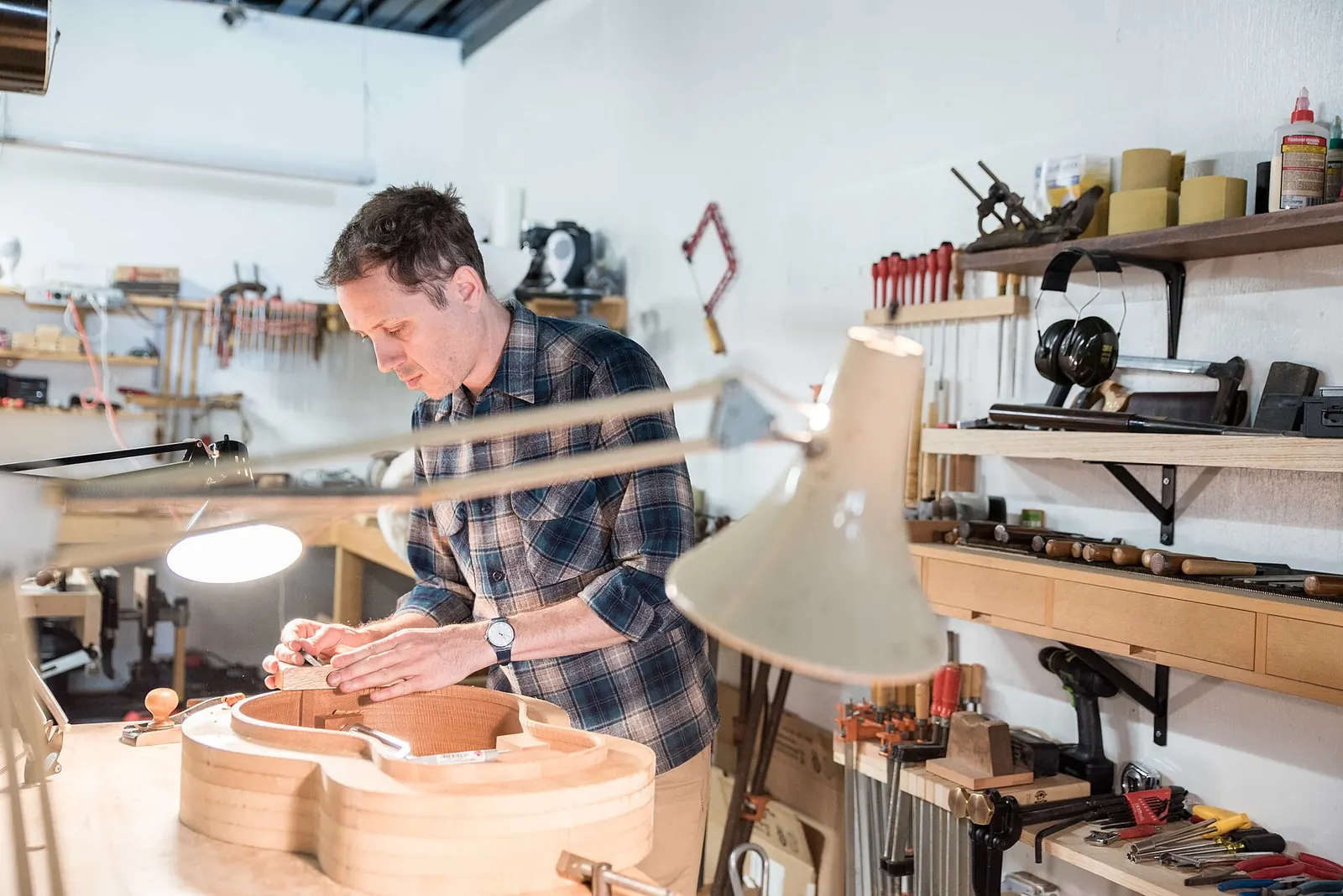
Wikipedia says the traditional flamenco guitar uses Spanish cypress, sycamore maple or rosewood for the back and sides, with a spruce top. Cypress gives the pale body and the livelier sound of a blanca guitar, while rosewood gives the deeper, more resonant negra. Volume has always mattered because guitarists must be heard over the dancers' nailed shoes.
What Torres changed
Wikipedia says Torres made the first recognisably modern classical guitars, and that most acoustic guitars today derive from his designs. He enlarged the body, thinned the top, arched it in both directions and braced it with a symmetrical fan. Flamenco makers later adapted that blueprint, lightening it further and keeping the top more percussive.
Low action and the tap plate
Low action makes certain fast techniques easier, and string buzz is not frowned on in flamenco the way it is in classical playing. Many flamenco guitars also carry a tap plate, a golpeador, which protects the top from the rhythmic finger taps called golpes. Those details are why the instrument looks and sounds the way it does.
Torres and the split
Wikipedia says Antonio de Torres, one of the most renowned luthiers, did not differentiate between flamenco and classical guitars. The distinction emerged only after Andrés Avelar and others popularised classical guitar music. So the museum visit at Casa Sors shows a shared ancestor: guitars from the great Spanish makers that both traditions grew from.
The maker's secret
Wikipedia retells a story in which an older Torres, asked at dinner about the secret of his guitars, said it lay in the feel of his thumb and forefinger telling him whether a soundboard was properly worked. Whatever the truth of the anecdote, it points at the same thing as the museum visit: the sound of a guitar is a craft judgment, made by hand, one top at a time.
What to listen for
In the room, listen for the percussive edge Wikipedia describes: a livelier, grittier sound than the classical guitar's, with finger taps used as rhythm. Once you hear it, the guitar becomes the clearest guide to the pulse of the whole evening.
Using this in the museum
When the guide leads you through the Casa Sors collection after the show, ask whether a guitar is a flamenco or a classical instrument, and how you can tell. The makers the venue names include Torres, Ramírez and Esteso, and Wikipedia notes that the split between the two types emerged only after Torres's time. The answer is often in the top, the body depth and the colour of the wood.
Frequently asked questions
Do flamenco guitars use nylon strings?
Usually yes, like classical guitars, according to Wikipedia.
Why do some flamenco guitars have a plastic plate?
It is a tap plate, or golpeador, that protects the top from rhythmic finger taps called golpes.
Is a flamenco guitar quieter?
No. Volume has traditionally been very important, because guitarists must be heard over the dancers' shoes.
What are blanca and negra guitars?
Blanca guitars use pale cypress and sound brighter and more percussive; negra guitars use rosewood or other dense woods for a deeper, more resonant tone.
Sources