The evening, door to door
Casa Sors flamenco: what to expect
How a Casa Sors flamenco evening runs from the street door to the guitar museum: arriving, seats, drinks, language, the show and who it suits.
Book flamenco at Casa Sors ↗Quick answer
Plan on a small studio room, an hour of live flamenco and a guided guitar museum visit afterwards. The room is at Carrer del Consell de Cent 215, 08011 Barcelona. The venue suggests arriving 15 to 20 minutes early, seats are assigned, and your confirmation shows the start time. Dance, guitar and song need no translation, and the museum guide speaks English or Spanish. Drinks and tapas come with the options that include them.
Finding the door
Casa Sors is at Carrer del Consell de Cent 215, 08011 Barcelona. The venue describes the spot as a quiet one on a pedestrian street in the centre, so a car or taxi may not stop at the door; a short walk from the nearest street is likely. Put the address into a map app instead of looking for a landmark, and allow a few spare minutes the first time. The same house also runs a music academy, an instrument shop and a restoration workshop, so the address may show more than one sign. Barcelona streets can make a short trip longer than the map suggests, so build in margin for the walk from wherever your taxi or metro stop leaves you.
Arriving
The venue's site suggests arriving 15 to 20 minutes early to settle in without rushing, and the start time of your evening is written on your confirmation. Staff meet guests at reception and point out their seats. A guest who arrives at the last minute loses that calm, and in a small room a late entrance is noticed by everyone. Treat the start time on your confirmation as the time the performance begins, not the time you should reach the street. If you booked tapas or a cocktail, arriving at the suggested time also gives staff room to bring them before the show starts. If your group is staying in different places, agree a meeting point in the street beforehand so everyone goes in together.
Drinks and tapas
If your option includes tapas or cocktails, the venue's site says they are served ahead of the performance, and other drinks from the menu can be ordered too. The booking page describes handcrafted drinks and signature cocktails among the selectable extras. Order before the lights change so service does not compete with the music. If you did not select a drink option, nothing is lost: the show is the same, and the drink is an add-on, not the point of the evening. A drink in your hand does not change the show, and ordering is quieter before the performance than during it.
The room and your seat

The show takes place in a soundproofed recording studio with assigned seating, and the ticket says every seat is close to the stage. That changes how the evening feels. You can see the dancers' footwork and the singer's breath, and the guitarist's hands, because nothing is far. Guests describe a cosy room with good sound. Where you sit decides your angle more than your distance, so if you have a preference for left or right, mention it to the venue after booking. The venue's pages say the room was designed for listening and feeling every detail, and that is a fair way to think about where you sit: closeness, not rank.
What the hour holds
Expect dancers, singers and guitarists performing together; the venue's pages add percussion. The venue says the programme moves through several traditional palos, with space for improvisation and a dialogue between song, guitar and dance, and that the artists vary from night to night. The ticket promises professional artists but not a fixed running order, so this guide names no pieces. If you want a way in, the guide to listening to flamenco explains what each form sounds like. Wikipedia describes flamenco as joining song, guitar, dance, rhythmic cycles called compás, improvised guitar passages called falsetas, handclaps and footwork, and that is a fair checklist for what to watch. Because the artists vary from night to night, no two evenings are quite the same, which is why this guide names no pieces.
Read next: How to listen to flamenco
Listening in a small room
Flamenco has its own ways of showing appreciation. Wikipedia explains that jaleo, the rhythmic hand-clapping and calls of encouragement such as olé, is a feature of the performance itself and is treated as part of the art. Whether a given room invites the audience to join is a house matter, so take your cue from the artists and from the people around you. In a space this small, a phone screen or a whispered comment carries, and the music works best when the room gives it silence.
Language
No Spanish is needed to follow flamenco, which speaks through movement and music. The guided museum visit runs in English or Spanish, which covers most visitors. In a mixed-language group, tell the venue when you book so the guide knows who is listening. Spanish speakers will catch the words, and everyone else can follow the feeling in the singer's voice and the dancer's posture, while the guide covers the instruments in your language. The museum guide can also be asked about the makers and the instruments in English or Spanish, which is useful in a mixed group.
After the show: the guitar museum
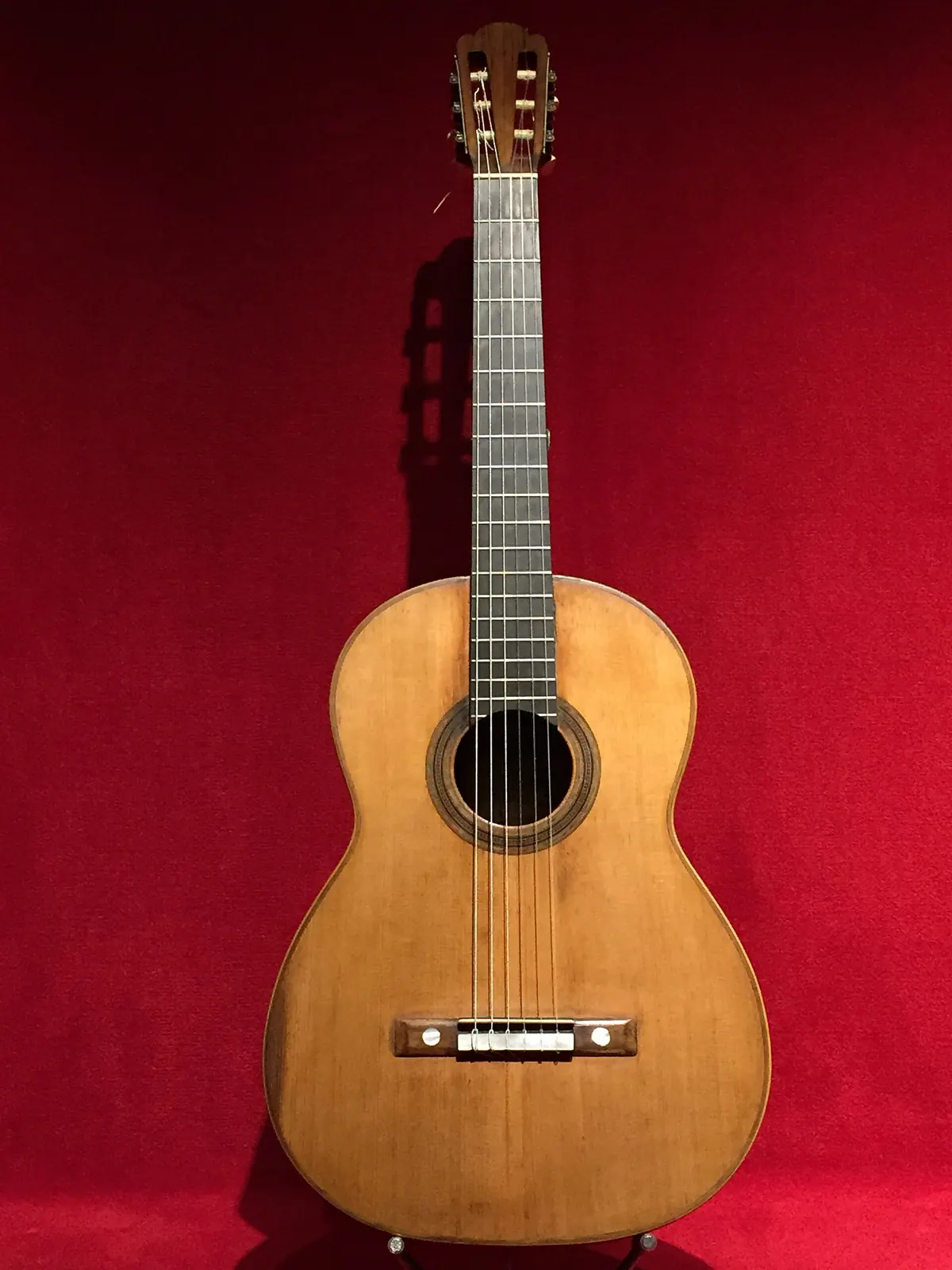
The venue places the guided museum visit after the performance. Its pages describe a collection of historic and flamenco guitars by makers such as Antonio de Torres, and mention a few minutes with the artists and photographs. The length of the visit varies, and the venue's own pages give different ranges, so leave the evening open afterwards instead of booking a dinner straight away. Wikipedia calls Torres the most important Spanish guitar maker of the 19th century, and the venue lists him among the makers in its collection.
Read next: Casa Sors guitar museum
Getting there and back
Barcelona's centre is served by metro, buses and taxis, and the simplest plan is to enter the address in a map app and follow it. This guide gives no line numbers or walking times because they change, and they would be guesses. Check how you will get back too: the evening ends after the museum visit, so keep a taxi or ride app as a fallback for a group. If you are staying outside the centre, work out the return trip ahead of the show, not after it. The venue says the room is in the centre of the city, and the exact route depends on where you start.
Access and who it suits
The ticket advertises wheelchair access. For details on the entrance, the room and the museum, write to the venue ahead of your trip and keep its reply with your confirmation. The evening suits adults and teenagers who like live music, couples, and small groups who want a quiet, close performance. Families with young children should check the venue first; the room is small and the programme is built around listening. Anyone using a wheelchair should say so when booking so the venue can prepare the seating. The ticket does not set an age limit that this guide can quote, so the venue is the right place to ask about children.
Who this isn't for
It is the wrong fit if you want dinner at the centre of the night, a large theatre or a party. It is a quiet, focused hour followed by a museum visit. It is not a flamenco lesson either. If you are travelling with someone who dislikes small rooms, or who struggles to sit still and silent, a bigger venue with a stage and a bar may suit them better. It also asks for attention: in a room where the artists are a few metres away, phones, whispered conversation and shifting about carry further than in a hall. It is also a poor fit for anyone planning a late, loud night out from the same spot, because the evening ends quietly among the guitars.
Frequently asked questions
Where is Casa Sors?
At Carrer del Consell de Cent 215, 08011 Barcelona, in the centre. The venue describes a quiet spot on a pedestrian street, so check the address in a map app before you set off.
How early should I arrive?
The venue suggests 15 to 20 minutes early. The start time is in your confirmation, and any tapas or cocktails you booked are served before the performance.
Is it suitable for a first flamenco show?
Yes. The booking page describes the show as suited to first-time visitors and to people who already love live music. The guide to listening to flamenco explains what you will hear.
Is Spanish needed?
No. Flamenco is dance, guitar and song, and the guided museum visit runs in English or Spanish.
Is it wheelchair accessible?
The ticket advertises wheelchair access. For details, write to the venue before you go.
Can I take photos?
The venue's pages mention photographs with the artists after the show. For rules during the performance, ask the venue when you arrive and follow staff instructions.
Sources
- Casa Sors Flamenco: the show and how it runs (the venue's site)
- Casa Sors Flamenco: the guitar museum (the venue's site)
- Casa Sors Flamenco: about the house (the venue's site)
- Casa Sors: about the house (its own site)
- Palo, Wikipedia: how forms are classified
- Flamenco, Wikipedia: the art form and its history